Your trade show booth may be on the show floor for only a few days, but its environmental impact can extend well beyond the event. Learn practical ways to make sustainability part of your exhibit planning.
Key Takeaways
- Renting modular booth components can reduce one-time construction and keep exhibit structures in use across multiple events.
- Designing graphics and booth components for reuse can help you avoid replacing materials that still have useful life.
- Flat-pack components and reusable shipping materials can make transportation and booth packaging more efficient.
- Planning what happens to booth materials after the show helps you identify what can be returned, reused, recycled, or repurposed.
Trade shows create a temporary space for your brand, but the materials behind that space don’t have to be short-lived. If you want to know how to make trade shows more environmentally friendly, focus on making choices that keep booth components in use longer, reduce unnecessary replacement, and make shipping and end-of-show handling easier.
How To Make Trade Shows More Environmentally Friendly
You don’t need to redesign your entire exhibit program in order to build an environmentally friendly trade show booth. Start by improving the booth structure and work outward.
The following sustainable booth design ideas can help you cut waste at every stage, from what gets built and shipped to what gets tossed after the show.
1. Rent a Modular Booth Instead of Building One
A one-time custom trade show booth may give you exactly what you want for one event, but it can also leave you with exhibit components that are difficult to use again. Renting a modular booth gives you access to structures that are designed to be reconfigured and reused across different exhibits.
Modular displays use interchangeable frames, panels, counters, and other components that can adapt to different booth sizes and layouts. Your graphics and brand elements can still make the booth feel specific to your company, while the main structure continues to serve other events instead of becoming waste after one show.
2. Design Booth Graphics To Outlive the Show
Trade show booth graphics often become unusable because they include event-specific details that expire quickly. A large wall graphic with the event name, date, booth number, or short-term campaign message may need to be replaced even when the material itself is still in good condition.
Keep your largest graphics focused on brand elements and messages that can work at more than one event. Put show-specific information on smaller replaceable panels, screens, or other areas that are easier to update.
This gives you more opportunities to reuse the main graphics without making your booth look outdated. It also keeps temporary messaging from forcing you to replace a larger branded graphic after every event.
3. Choose Flooring With a Take-Back Program
Trade show booth flooring covers a large part of your exhibit, so it’s worth asking what happens to it after the event. If your flooring supplier offers a take-back program, find out whether the material will be reused, recycled, or handled through another recovery process.
Ask how the program works before you place the order. You’ll want to know who is responsible for returning the flooring and whether there are packaging or condition requirements you need to follow.
A take-back option is only useful if the return plan fits your show logistics. You can also ask whether the same flooring can be cleaned and reused at future events before deciding that a take-back program is the better overall option.
4. Design Booth Components to Flat-Pack for Shipping
The way your trade show booth is designed can affect how much space its components require during shipping. Bulky components can require larger crates and more space during transport, even when much of that volume is empty air.
Flat-pack or collapsible components break down into a smaller form for shipping and storage. This approach can work well for certain counters, shelving, panels, and display pieces. It can also make environmentally friendly trade show booth elements easier to move from one event to the next.
5. Build the Booth Around Standardized Panels
Highly specialized trade show booth parts can be difficult to repair or reuse when your exhibit layout changes. Standardized panel systems give you more flexibility because the same pieces can work in different configurations.
If one section becomes damaged, you may be able to replace or refinish that part instead of rebuilding a larger wall or structure. Standard sizes can also make it easier to change graphics, expand a display, or reduce the footprint for a smaller show. This is one reason reusable panel systems are often part of eco-friendly display planning.
6. Ask Your Booth Builder for a Material Passport
A material passport can help you keep track of what your trade show exhibit is made from and how its components may be handled later. For a trade show booth, it doesn’t have to be complicated. You can ask your booth builder for a clear inventory of the major materials and components used in the exhibit.
The record can identify which pieces are rented or owned, which pieces can be repaired, and which may be reusable or recyclable at the end of their useful life. Having that information makes future decisions easier. Instead of guessing what a panel or fixture contains years later, your team has a reference when it’s time to repair, replace, return, or retire it.
7. Ditch Stretch Wrap for Reusable Shipping Materials
Trade show booth components need protection during shipping, but disposable stretch wrap and similar materials can add to the waste created every time an exhibit travels. Ask your exhibit partner where reusable protection can replace single-use packaging as part of making your trade show more environmentally friendly.
Reusable crates, padded covers, durable cases, straps, and corner protectors can help protect exhibit components through repeated trips. The right option depends on the item and how it’ll be handled, so packaging should be planned around the actual booth components. The goal is to protect the booth without automatically starting with materials that’ll be discarded after one trip.
8. Plan the Booth’s Afterlife Before the Show
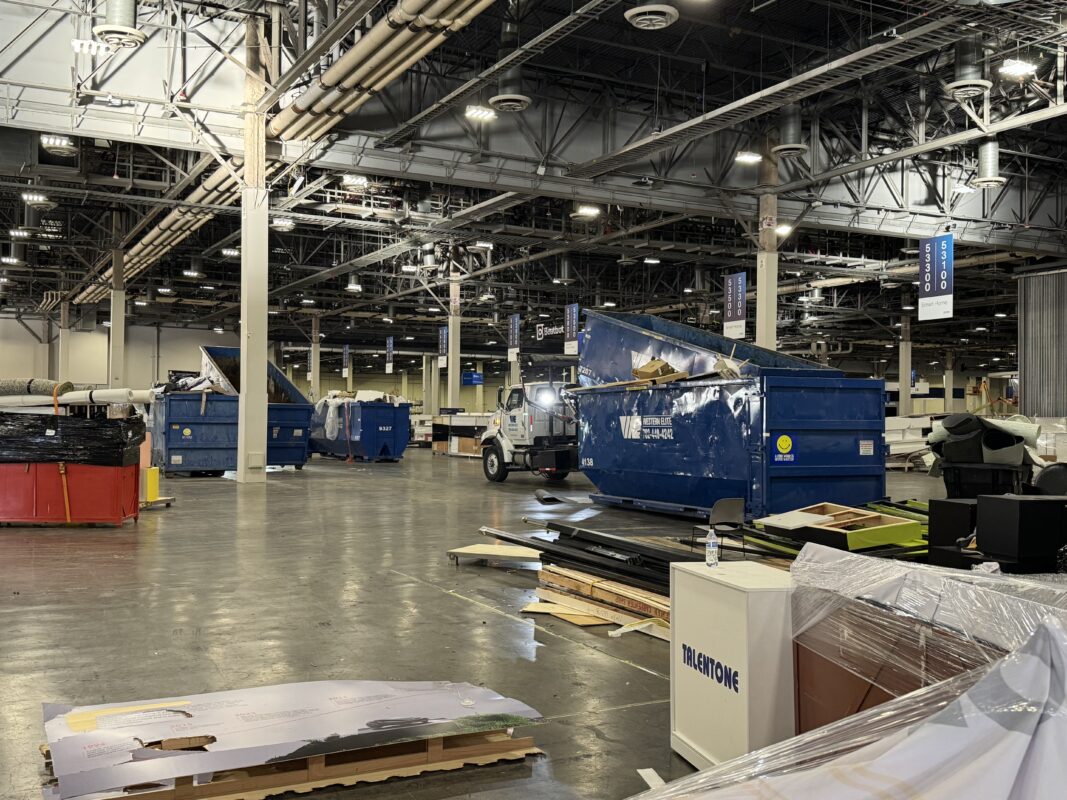
Your plan for an eco-friendly trade show should include what happens to the booth’s components after the event ends. Don’t wait until teardown to make those decisions. That’s when schedules are tight, crews are moving quickly, and unwanted materials can easily become someone else’s disposal problem.
Before the event, decide what will happen to each booth element afterward. For example, will it be stored, returned to the rental provider, reused at another show, recycled, donated, or repurposed?
Assign responsibility for each step and make sure your exhibit partner understands the plan. Thinking about the booth’s next use during the design process can also help guide your decisions about materials, graphics, flooring, packaging, and construction as those choices come up.
LV Exhibits Makes Trade Show Booths More Environmentally Friendly
LV Exhibit Rentals helps you cut down on single-use waste by designing exhibits around modular, reusable rental structures. We’ll build you a space tailored to your brand and event goals without the added waste or hassle of building a brand-new booth for every show.
Our turnkey service covers every stage of the process, including design, custom graphics, shipping, installation, and final teardown. If sustainability is part of your event strategy, contact LV Exhibit Rentals today to learn how to rent a more environmentally friendly trade show booth.