
Whether you’re transporting cargo, creating a container home, or designing an event exhibit, you need to know how much a shipping container weighs. From calculating shipping costs to ensuring the safety of workers, knowing the shipping container’s weight is key to smooth logistics.
How Much a Shipping Container Weighs Can Vary

There are two global standard shipping container sizes that you will see most often: the 20-foot container and the 40-foot container. While these are standardized by ISO (International Organization for Standardization), their weights can fluctuate based on the manufacturer, the age of the container, and the specific materials used.
Here is a quick snapshot of the empty shipping container weights you can typically expect:
- 20-Foot Shipping Container: 4,500–5,000 lb empty
- 40-Foot Shipping Container: 8,000–9,000 lb empty
Both containers are generally built to hold a maximum weight (container plus cargo) of around 67,200 lbs. However, to safely load and transport these units, you need to understand the industry terms found on every container’s data plate.
Tare Weight
The tare weight is the weight of the empty container. If you are modifying a container, your modifications change the tare weight.
Payload
Payload is the weight of the actual cargo or goods you are shipping. You can calculate your maximum available payload using this simple formula: Max Gross Weight – Tare Weight = Payload
For a standard 20-foot container, if the Max Gross is 67,200 lbs and the Tare is 5,000 lbs, your maximum cargo payload is 62,200 lbs.
Container Type
Not all shipping containers are created equal. The type of container you choose significantly impacts the weight.
- High Cube Containers: These are one foot taller than standard containers. A 40-foot High Cube weighs approximately 9,200 lbs empty.
- Refrigerated Containers (Reefer): Because they contain heavy insulation, stainless steel interior walls, and a massive refrigeration unit, a 40-foot Reefer can have a tare weight of over 10,000 lbs.
Once you start modifying a container, the standard shipping container weight charts no longer apply. Because the range of customizable shipping containers is so vast, the only way to know the true weight of a modified unit is to weigh it after the work is finished.
Why Accurate Container Weight Matters
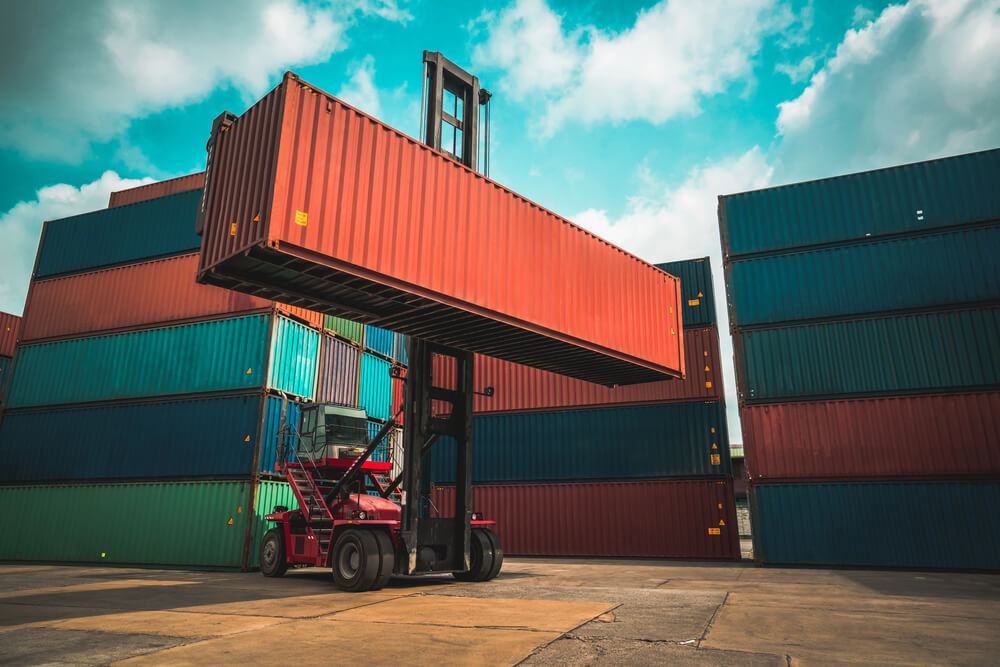
Getting shipping container weights right is about legal compliance, financial risk, and safety.
- Overloading Fines: If your truck is stopped at a weigh station and found to be overweight, you will face heavy fines and delays until the excess cargo is removed.
- Unsafe Lifting: If you underestimate the weight of a loaded container, a forklift might tip forward, or a crane cable could snap.
- SOLAS VGM Requirements: Without a certified weight ticket for international sea shipments, the terminal will refuse to load your container onto the vessel.
By ensuring you know your shipping container’s exact weight, you protect your budget, your timeline, and the people handling your container.
A Lightweight Shipping Container Alternative
Shipping container trade show booths have become popular at events because they offer a ready-made structure that’s easy to brand and hard to miss. Yet as event teams push for faster installs, easier transport, and more design freedom, interest is growing to find alternative options that can deliver the same impact as shipping containers with far more flexibility.
LV Exhibit Rentals offers the Flexbox, a lightweight aluminum-and-steel framework that is easier to ship, faster to assemble, and endlessly customizable. It gives you the freedom to design striking event spaces without wrestling with heavy infrastructure or rigid layouts.
Ready to rethink your event footprint? Explore the Flexbox, your modern trade show shipping container alternative.